Japan Food Series: Ramen Baisensha in Sapporo – A Deep Dive into Classic Miso Ramen in Ramen Alley
Reviewed by Tastes of Ottawa
Table of Contents
Ramen Baisensha – Restaurant Overview
Ramen Baisensha is a small ramen shop tucked inside Ramen Alley, one of Sapporo’s most famous food destinations. Ramen Alley is exactly what it sounds like—a narrow alley lined with compact ramen shops, each specializing in its own interpretation of Sapporo-style ramen. Many of these shops have been operating for decades, contributing to the alley’s reputation as a must-visit spot for ramen lovers.
Baisensha itself is extremely small, with seating for roughly seven people. It’s intimate, quiet, and very focused. When I visited around 2 pm, there was no lineup at all, which felt almost surprising given how popular ramen alley is. That timing made for a relaxed experience and gave me a chance to really pay attention to the food rather than rushing through a crowded meal.
The space is simple and functional, very much what you’d expect from a traditional ramen shop in Japan. There’s no excess décor or attempt to modernize the experience. The kitchen is close, the seating is tight, and everything about the setup reinforces the idea that you’re here for one thing only: ramen.
Would return? Yes.
Ramen Alley & Sapporo’s Ramen History
To understand why eating at Ramen Baisensha matters, it helps to understand Sapporo’s relationship with ramen, particularly miso ramen. While ramen is eaten all over Japan, Sapporo is widely recognized as the birthplace of miso ramen.
Miso ramen is believed to have originated in Sapporo in the 1950s, when a local ramen shop experimented with adding miso paste to broth as a way to create something heartier and more suitable for Hokkaido’s cold winters. The result was a richer, deeper soup that stood up well to thicker noodles, heavier toppings, and colder temperatures. Over time, this style became synonymous with the city.
Sapporo-style miso ramen typically features:
- A rich, savoury miso-based broth
- Thick, curly noodles that hold onto the soup
- Hearty toppings such as pork, bamboo shoots, corn, and sometimes butter
Ramen Alley, located in the Susukino district, became a focal point for this style. Many of the shops here helped define and refine miso ramen over the decades. Eating ramen in this alley doesn’t just feel like grabbing a meal—it feels like stepping into a living piece of Sapporo’s food history.
Ramen – Miso Original
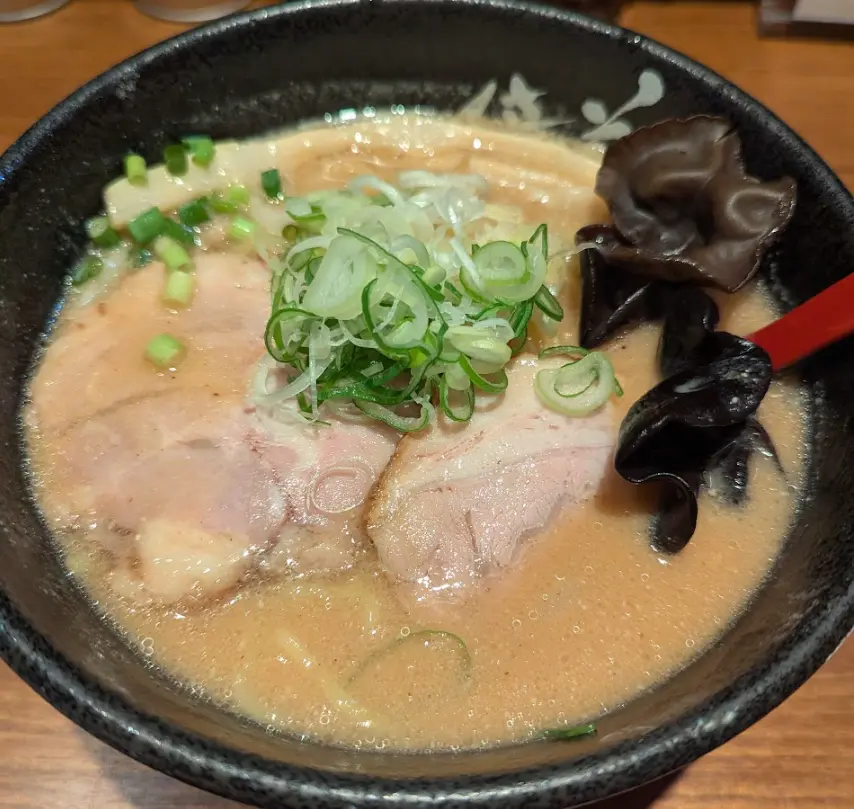
The Miso Original ramen at Baisensha was excellent and immediately showed why Sapporo is so closely associated with this style. The broth was deeply flavourful, with a strong miso presence that didn’t feel salty or overpowering. Instead, it had a layered richness that developed as you ate, warming and satisfying without becoming heavy.
The noodles were exactly what I look for in miso ramen: thick and chewy, with enough structure to stand up to the broth. This alone elevated the dish for me, as thicker noodles create a better balance with miso-based soups. Each bite carried plenty of broth, and the texture stayed consistent all the way through the bowl.
The pork was very tender, breaking apart easily and absorbing the flavour of the soup. It didn’t feel dry or overcooked, and it complemented the broth rather than competing with it. The bamboo shoots added a mild crunch and freshness, while the wood ear mushrooms brought a slightly springy texture that helped break up the richness of the dish.
Everything in this bowl felt intentional and balanced. Nothing was there just to fill space. The components worked together, making this a very satisfying and complete ramen experience.
Order again? Yes.
Ramen – Spicy Miso
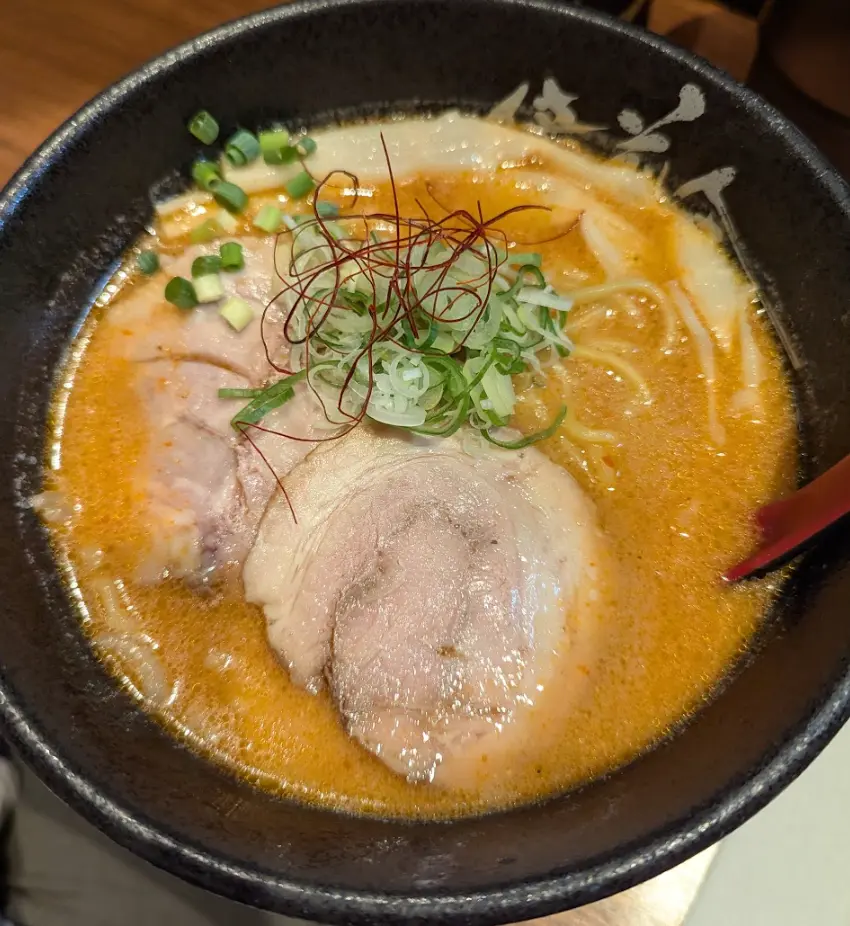
The Spicy Miso ramen built on everything that worked in the original version, with an added layer of heat. The spice level was very well judged—not overwhelming, but enough to add warmth and complexity to the broth. It enhanced the miso flavour rather than masking it.
The broth remained rich and savoury, with the spice adding depth instead of sharpness. This is the kind of spice that builds gradually and stays pleasant rather than aggressive. For someone who enjoys a bit of heat but doesn’t want it to dominate the dish, this was close to ideal.
The noodles were again thick and chewy, maintaining their texture despite the richness of the soup. This consistency across both bowls showed that Baisensha has its fundamentals dialed in. The toppings mirrored the original miso ramen, and they worked just as well in the spicier context.
If the original miso ramen represents classic Sapporo style, the spicy miso feels like a natural evolution—respecting tradition while adding a modern twist.
Order again? Yes.
Final Thoughts
Eating at Ramen Baisensha felt like experiencing Sapporo ramen in its proper context. Sitting inside a tiny shop in Ramen Alley, eating thick noodles in a rich miso broth, made it easy to understand why this style became so closely tied to the city’s identity.
Both the Miso Original and Spicy Miso ramen were very good, with the original showcasing balance and depth, and the spicy version adding complexity without sacrificing flavour. If you’re visiting Sapporo and want to try miso ramen in a setting that feels authentic and historically grounded, Ramen Baisensha is absolutely worth considering.
As part of my Japan Food Series, this meal reinforced how much context matters when it comes to food. Miso ramen in Sapporo isn’t just ramen—it’s part of the city’s story. And at Ramen Baisensha, that story is still being served, one bowl at a time.
If you’re looking for more ramen restaurants in Sapporo, check out my other reviews: