Japan Food Series: Sapporo Beer Garden & Genghis Khan Lamb Experience
Reviewed by Tastes of Ottawa
Table of Contents
Sapporo Beer Garden – Overview & History
9 Chome-2-10 Kita 7 Johigashi, Higashi Ward, Sapporo, Hokkaido 065-0007, Japan
The Sapporo Beer Garden is one of the most iconic food destinations in the city and a place that feels deeply tied to Hokkaido’s identity. Located in a historic red-brick building that was originally constructed in the late 1800s as a beer brewery, the site is closely connected to the origins of Sapporo Beer, Japan’s oldest beer brand. Walking onto the grounds, there’s an immediate sense of history—this isn’t just a restaurant, but a landmark that reflects how beer culture and food culture developed together in Hokkaido.
The beer garden today functions as both a restaurant complex and a cultural experience. Large dining halls, communal seating, and an atmosphere built around sharing food and beer make it feel lively without being chaotic. It’s a place locals bring visiting friends, and where travellers go specifically to experience something uniquely Sapporo. Unlike many restaurants I visited on this trip, this one felt intentionally large-scale and celebratory.
Before coming to Sapporo, I already knew the city was associated with beer, but it wasn’t until arriving and researching places to eat that I realized how closely the beer garden is tied to another regional specialty: Genghis Khan (jingisukan) lamb barbecue.
Would return? Yes.
Genghis Khan (Jingisukan) — A Sapporo Specialty
Genghis Khan is a style of grilled lamb that’s strongly associated with Hokkaido. The name comes from the idea that Mongolian soldiers cooked meat on their helmets, though historically this is more legend than fact. Regardless of the origin story, the dish became popular in Hokkaido in the early 20th century, largely because sheep farming was encouraged in the region as Japan looked to develop wool production.
The dish is typically cooked on a convex metal grill, where meat is placed on the raised centre and vegetables cook around the edges. The shape allows excess fat to drip down, while vegetables soak up flavour from the meat. Lamb is the star, and it’s often lightly seasoned or dipped into sauce after grilling rather than heavily marinated beforehand.
At the Sapporo Beer Garden, Genghis Khan isn’t just one menu item—it’s the main event. Pairing lamb barbecue with cold beer feels intentional and traditional, especially given Hokkaido’s cooler climate and agricultural roots.
Sapporo Classic Beer

One of the highlights of visiting the beer garden is the chance to drink Sapporo Classic, a beer that’s only available in Hokkaido. Ordering it here felt like the right context—freshly poured, ice-cold, and paired with grilled food.
The beer was excellent. It was crisp, clean, and extremely refreshing, with a balanced flavour that didn’t feel overly bitter or heavy. It’s the kind of beer you can keep drinking without fatigue, especially alongside rich or grilled foods. Compared to Sapporo beers available outside Japan, this tasted fresher and more restrained, leaning into drinkability rather than boldness.
It’s easy to see why this beer has such a strong following locally. Drinking Sapporo Classic at the beer garden felt less like ordering a brand-name beer and more like participating in a local ritual.
Order again? Yes.
Hokkaido Corn

Hokkaido corn has a reputation, and this absolutely lived up to it. The corn was incredibly sweet, juicy, and had a firm yet tender texture. Each bite felt fresh, and the natural sweetness didn’t need butter or heavy seasoning to shine.
Corn is one of those ingredients that can feel forgettable, but this was genuinely memorable. It reinforced how strong Hokkaido’s agricultural reputation is. Whether grilled or served simply, the quality of the ingredient carried the dish. This was easily one of the best corn experiences I’ve had.
Order again? Yes.
Hokkaido Melon

The melon was another standout. Hokkaido is famous for its melons, often sold at premium prices and even given as gifts. This one showed exactly why. It was extremely juicy, had a clean sweetness, and avoided being overly sugary or cloying.
What impressed me most was the balance. The sweetness was present but restrained, letting the natural fruit flavour come through. Texture-wise, it was soft without being mushy, making each bite refreshing rather than heavy. It ranked among the best melons I’ve had and felt like a perfect palate cleanser alongside grilled meats and beer.
Order again? Yes.
Assorted Lamb (Genghis Khan)
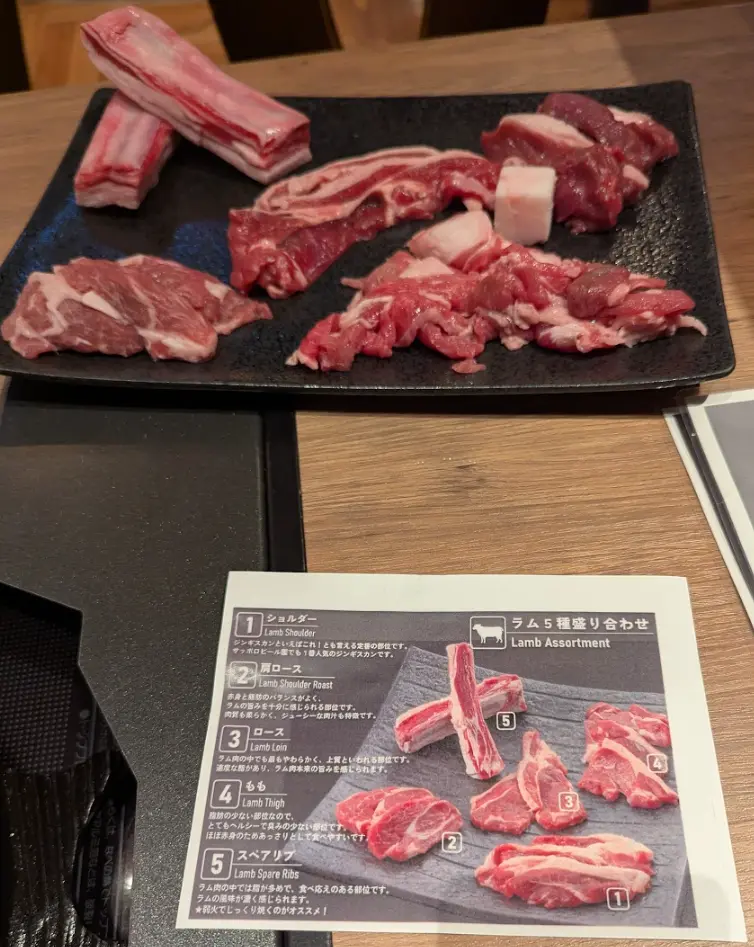
The lamb was a mixed experience. Some pieces were tender, juicy, and enjoyable, especially when cooked carefully and eaten fresh off the grill. Those bites showed why Genghis Khan lamb is such a staple here—rich flavour, satisfying texture, and a natural pairing with beer.
Other pieces, however, were less successful. Some cuts were tougher and didn’t soften much even after grilling, which made the overall dish inconsistent. The flavour itself was fine, but texture varied noticeably from piece to piece.
That said, part of the experience here feels communal and interactive. You’re cooking the meat yourself, adjusting doneness, timing, and pairings. While the lamb wasn’t perfect across the board, the act of grilling it, pairing it with vegetables, and washing it down with Sapporo Classic still made the experience enjoyable as a whole.
Order again? Maybe.
Final Thoughts
The Sapporo Beer Garden is as much about atmosphere and tradition as it is about the food itself. It’s not a refined, minimalist dining experience like some of the sushi or soup curry spots I visited. Instead, it’s loud, social, and rooted in regional identity.
What stood out most was how clearly everything here is tied to Hokkaido: the beer, the lamb, the corn, and the melon. Even when certain elements—like the lamb—were inconsistent, the overall experience still felt worthwhile because of the context. Drinking Sapporo Classic in the place where the brand’s history began, while grilling lamb in a style unique to the region, made it feel distinctly local.
Compared to my usual Ottawa restaurant reviews, this was a very different kind of meal. It wasn’t about precision or technique—it was about tradition, ingredients, and shared experience. As part of my Japan Food Series, the Sapporo Beer Garden represents one of those places you visit not just to eat, but to understand the culture of the city a little better.
If you’re visiting Sapporo and want to experience something that combines history, regional food, and local beer in one place, the Sapporo Beer Garden is hard to ignore. Even with a few imperfections, it delivers a memorable snapshot of what makes Hokkaido food culture unique.
If you’re interested in unique dishes of Sapporo, check out my review of Soup Curry that is famous in Sapporo.